The Birth of the Automobile
The history of Mercedes-Benz is inseparable from the invention of the automobile itself. In 1886, German engineer Karl Benz built the Benz Patent-Motorwagen, widely regarded as the world’s first true automobile powered by an internal combustion engine. Around the same time, Gottlieb Daimler and Wilhelm Maybach, working independently, developed their own high-speed gasoline engine and installed it in a carriage. These parallel innovations laid the foundation for what would become the Mercedes-Benz legacy.
Karl Benz’s wife, Bertha Benz, played a historic role in popularizing the automobile. In 1888, without informing her husband, she undertook the first long-distance journey in the Motorwagen, driving about 66 miles from Mannheim to her mother’s home. This journey demonstrated the practicality of the automobile and remains a legendary milestone in automotive history.
The Mercedes Name and Early Success
The name “Mercedes” entered the story in the early 20th century. In 1901, the Daimler-Motoren-Gesellschaft (DMG) company, founded by Daimler and Maybach, produced a revolutionary car for businessman and racing enthusiast Emil Jellinek. He insisted the car be named after his daughter, Mercédès Jellinek, and the name stuck. The 1901 Mercedes 35 hp was groundbreaking for its design, speed, and handling, and it marked the true beginning of the Mercedes brand in the luxury and performance markets.
Meanwhile, Karl Benz’s company, Benz & Cie., continued to develop and sell cars. For a time, Daimler’s Mercedes cars and Benz’s automobiles competed in the German and international markets, each gaining strong reputations for innovation and reliability.
The Merger – Birth of Mercedes-Benz
The economic pressures of the 1920s, particularly after World War I, forced many German companies to consolidate. In 1926, Benz & Cie. and Daimler-Motoren-Gesellschaft merged to form Mercedes-Benz, creating one of the most powerful alliances in automotive history. From this point on, cars carried the name Mercedes-Benz and were represented by the iconic three-pointed star logo, symbolizing the company’s ambition to dominate transportation on land, sea, and air.
Mercedes-Benz quickly established itself as a global leader in luxury and performance automobiles. During the late 1920s and 1930s, it produced some of the most iconic vehicles of the era, including the Mercedes-Benz SSK, which became a legend in motorsport and luxury design.
War, Reconstruction, and Post-War Growth
During World War II, Mercedes-Benz, like many German companies, shifted much of its production to military vehicles, including trucks and aircraft engines. This period was marked by the use of forced labor, a dark chapter in the company’s history that Mercedes-Benz later publicly acknowledged.
After the war, much of the company’s factories lay in ruins, but Mercedes-Benz quickly rebuilt. By 1946, the company resumed production with the 170 V, a pre-war design adapted for the post-war market. By the 1950s, Mercedes-Benz had re-established itself as a global symbol of luxury and engineering excellence. The release of the Mercedes-Benz 300 SL “Gullwing” in 1954, with its revolutionary fuel injection system and distinctive upward-opening doors, became one of the most iconic sports cars in history.
Expansion and Innovation (1960s–1980s)
From the 1960s onward, Mercedes-Benz expanded its lineup to include luxury sedans, coupes, and SUVs, steadily building its reputation as a producer of safe, reliable, and innovative vehicles. The Mercedes-Benz S-Class, launched in the early 1970s, set new standards in automotive luxury, safety, and technology, becoming the company’s flagship model and a benchmark for the entire industry.
Mercedes-Benz also became a leader in automotive safety innovations. It pioneered features such as crumple zones, anti-lock braking systems (ABS), airbags, and stability control. These innovations not only enhanced the company’s reputation but also influenced the entire global automotive industry.
In motorsport, Mercedes-Benz enjoyed success in Formula 1 and endurance racing. Its engines powered multiple race-winning cars, further strengthening its image as both a luxury and performance brand.
Global Expansion and the Modern Era
In the late 20th and early 21st centuries, Mercedes-Benz became a truly global brand. It expanded production plants worldwide, including in the United States, South Africa, and China. The brand diversified its product range, introducing the C-Class, E-Class, and A-Class, appealing to different market segments while maintaining its luxury identity.
In 1998, Mercedes-Benz’s parent company Daimler-Benz merged with Chrysler to form DaimlerChrysler AG, in what was then seen as a bold attempt to create a transatlantic automotive powerhouse. However, the merger struggled and was eventually dissolved in 2007, with Daimler returning to its identity as Daimler AG.
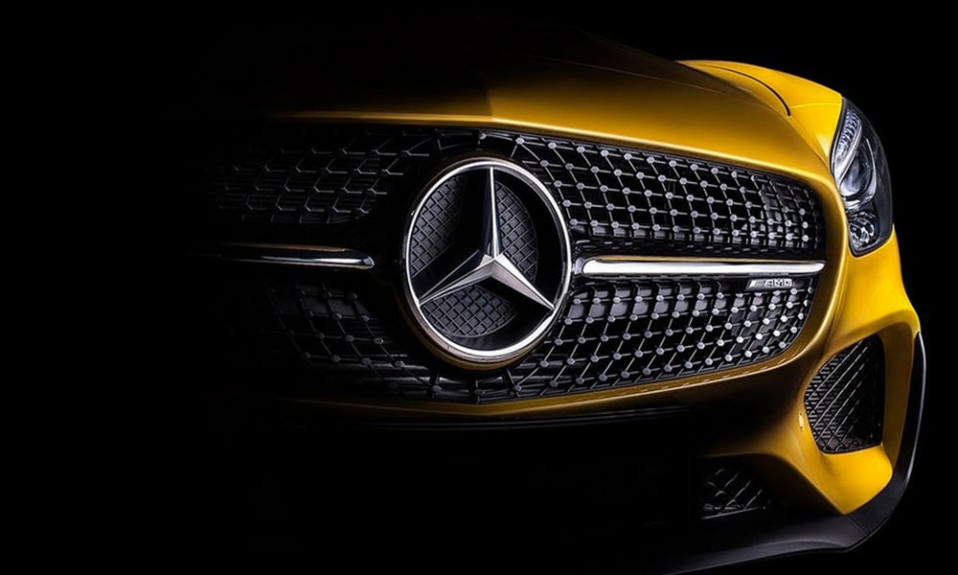
Mercedes-Benz continued to innovate with high-performance models under its AMG division, producing some of the fastest and most powerful cars in the world. Models like the Mercedes-AMG GT and the SLS AMG became modern icons, blending luxury with motorsport DNA.
Sustainability and the Electric Future
In the 2010s and 2020s, Mercedes-Benz entered a new era focused on sustainability and electrification. The company launched the EQ sub-brand for electric vehicles, beginning with the EQC SUV in 2019 and expanding into models like the EQS luxury sedan, which serves as the electric counterpart to the flagship S-Class.
Mercedes-Benz has committed to becoming fully electric by the 2030s in many markets, aligning with global efforts to reduce carbon emissions. The company continues to develop advanced technologies, including autonomous driving systems, connected car services, and next-generation electric powertrains, ensuring that it remains at the forefront of automotive innovation.
A Legacy of Excellence
From Karl Benz’s invention of the first automobile in 1886 to today’s cutting-edge electric vehicles, Mercedes-Benz has remained a symbol of luxury, innovation, and engineering excellence for more than 135 years. Guided by its iconic three-pointed star, the company has consistently shaped the global automotive industry with groundbreaking technologies, safety innovations, and timeless designs. Today, Mercedes-Benz stands not only as a maker of luxury cars but also as a pioneer driving the future of sustainable and intelligent mobility.


No comments:
Post a Comment